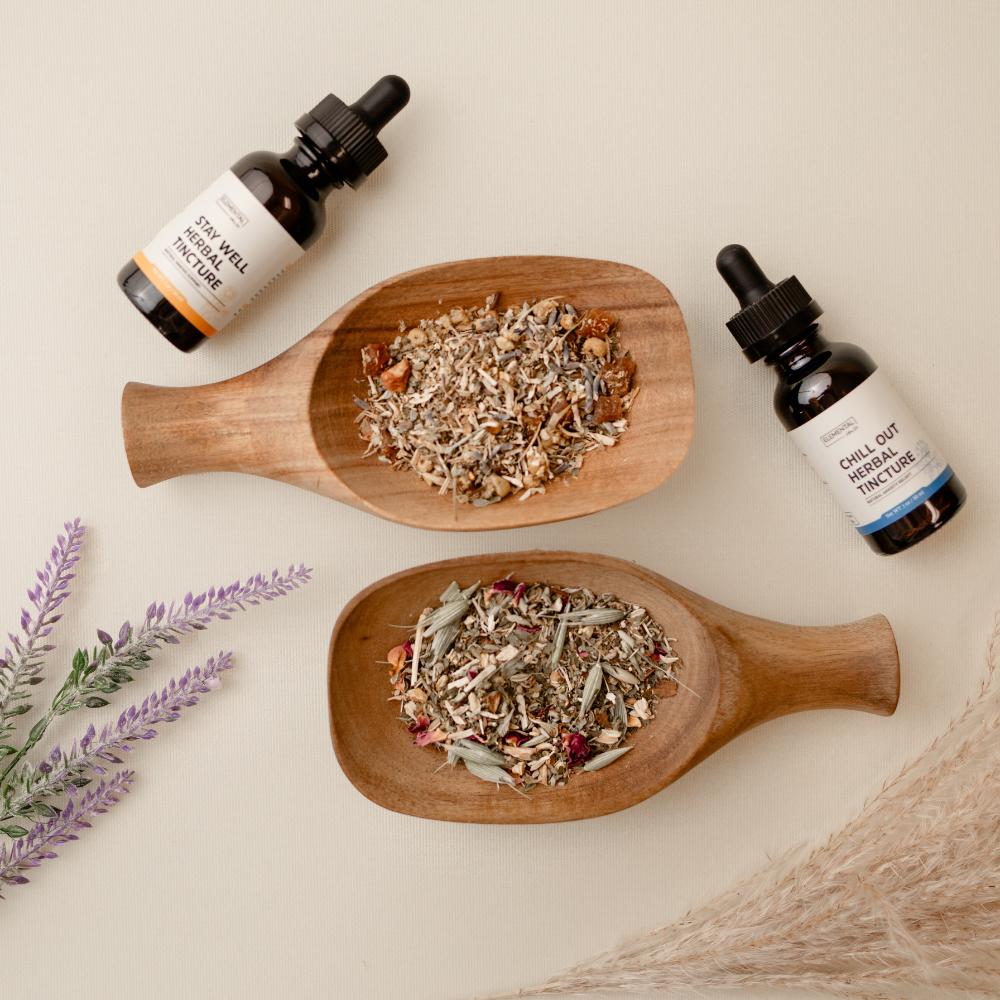
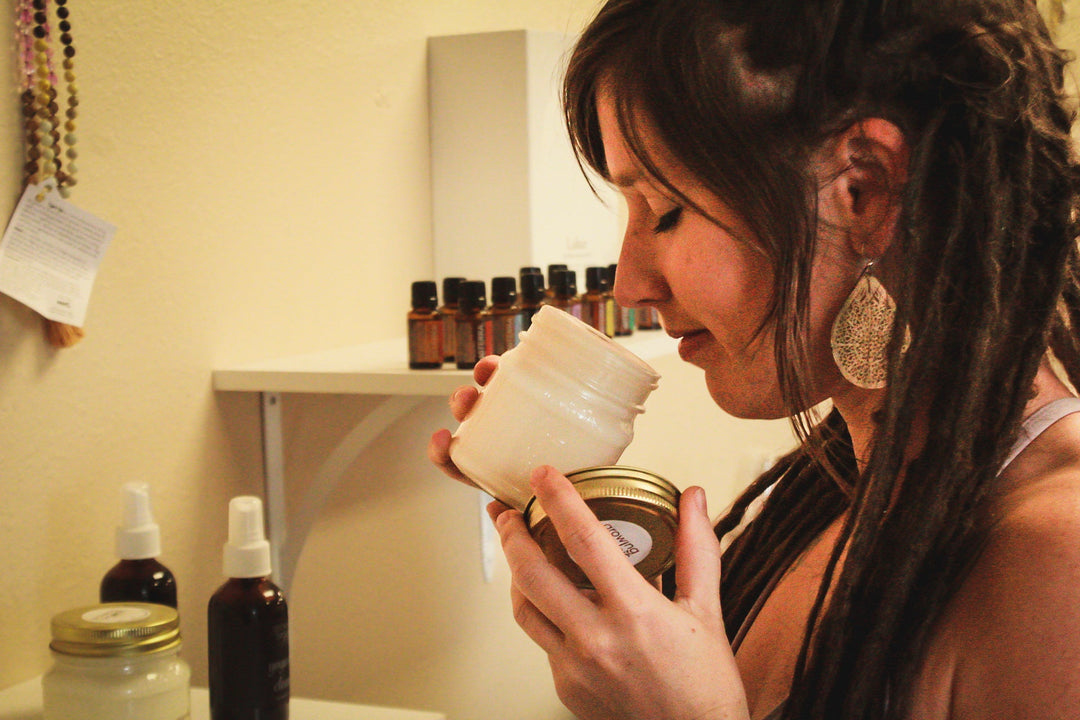
Small-batch natural wellness candles made in Colorado, poured in 100% soy wax — not a soy-paraffin blend — with hemp wicks, no dyes, and non-toxic, phthalate-free fragrance. Four scents, each built for a different kind of quiet.
Most clean candles and healthy candles won't tell you what's actually in them. Here's ours: soy wax, a hemp wick, and phthalate-free fragrance oil. That last one is the specification that actually matters. Phthalates are used as fixatives in fragrance, several are endocrine disruptors, and because "fragrance" is protected as a trade secret they don't have to appear on a label. A mass-market candle simply won't say. Ours are phthalate-free, and we'd rather give you a checkable fact than the word "natural."
Which scent
- Sage + Lavender — soft and herbaceous. The evening one, for winding down and getting to sleep.
- Vetiver + Cedarwood — deep and earthy. For the restless, scattered days rather than the tense ones.
- Sandalwood + Cypress — warm and clean. Made for meditation, where you want settled but not sleepy.
- Frankincense + Myrrh — resinous and ceremonial. For ritual, transitions, and marking something.
Each is paired with a mantra if you use one. All are natural candles in the sense that matters — 100% soy, hand-poured in small batches, nothing hidden on the label.
What a candle actually does for stress
We'd rather be straight with you than sell you aromatherapy claims a candle can't support. No candle delivers a therapeutic dose of essential oil — the compounds degrade at candle temperatures and throw weakly in wax, which is why almost every scented candle on the market, ours included, uses fragrance oils.
What a candle genuinely does is build an association. Scent reaches the emotional brain faster than any other sense, and a smell used consistently at the same moment becomes a cue for that moment. Light the same candle every evening as you stop working and, within a few weeks, the scent itself begins the shift before you've done anything else. That's ordinary associative learning, it's well established, and it works with any scent.
The second thing is simpler. Lighting a candle takes ten seconds and it draws a line between the day and the rest of the evening. Most people don't have one.
If you want the researched effects of actual essential oils — lavender for sleep, bergamot for mood — that needs a diffuser or a roller, and you'll find both in our aromatherapy collection.
Read more
- Candles for relaxation: which scents actually calm your nervous system — what the research supports, and what it doesn't
- Meditation candles: building a practice space — flame gazing, setting up a corner, and why air quality matters more during practice
- Soy wax vs paraffin — an honest comparison, including why the benzene claim you've read doesn't hold up
Burning them well
Let the first burn pool all the way to the edges — two to three hours. Soy has a memory, and a first burn that tunnels will tunnel for the life of the candle. Trim the wick to about a quarter inch before every burn; it's the single biggest thing you can do to reduce soot, and it's free. Keep them out of drafts, burn no more than four hours at a stretch, ventilate the room, and never leave one unattended.